AVTECH Sweden: Cleared for Takeoff

It’s the SaaS apocalypse, and SaaS companies are being taken to the woodchipper left, right, and centre due to AI fears. However, I have no interest in popular bluechips that still trade at 80x earnings after dropping 35%. Instead I want to turn your attention to a small, hidden gem that’s being sold off for unrelated and far less justifiable reasons. Come with me to Sweden to introduce you to high growth, high margin Airplane software company AVTECH Sweden AB ($AVTB).
AVTB is a Swedish software company that specialises in digital air traffic management. Their various software services help improve fuel efficiency, lower emissions and improve safety through flight path optimisation and weather monitoring. Their core software offering is ClearPath, which has been shown to reduce fuel consumption by 2-3%, a huge boost for a business whose largest expense is fuel. The first advantage that AVTB has is an exclusive partnership with the UK Met (Meteorological) Office, one of only two World Area Forecast Centres in the world, giving them higher quality data than any of their competitors. For context, most airlines use 100km resolution weather data, vs 10km for AVTB. This data has allowed them to build the best meteorological and flight planning models available, which would provide them an advantage even if competitors were to get access to comparable data and start building their own. Finally, AVTB’s software requires no hardware (unlike many competitors), and is built to utilise existing aircraft hardware.
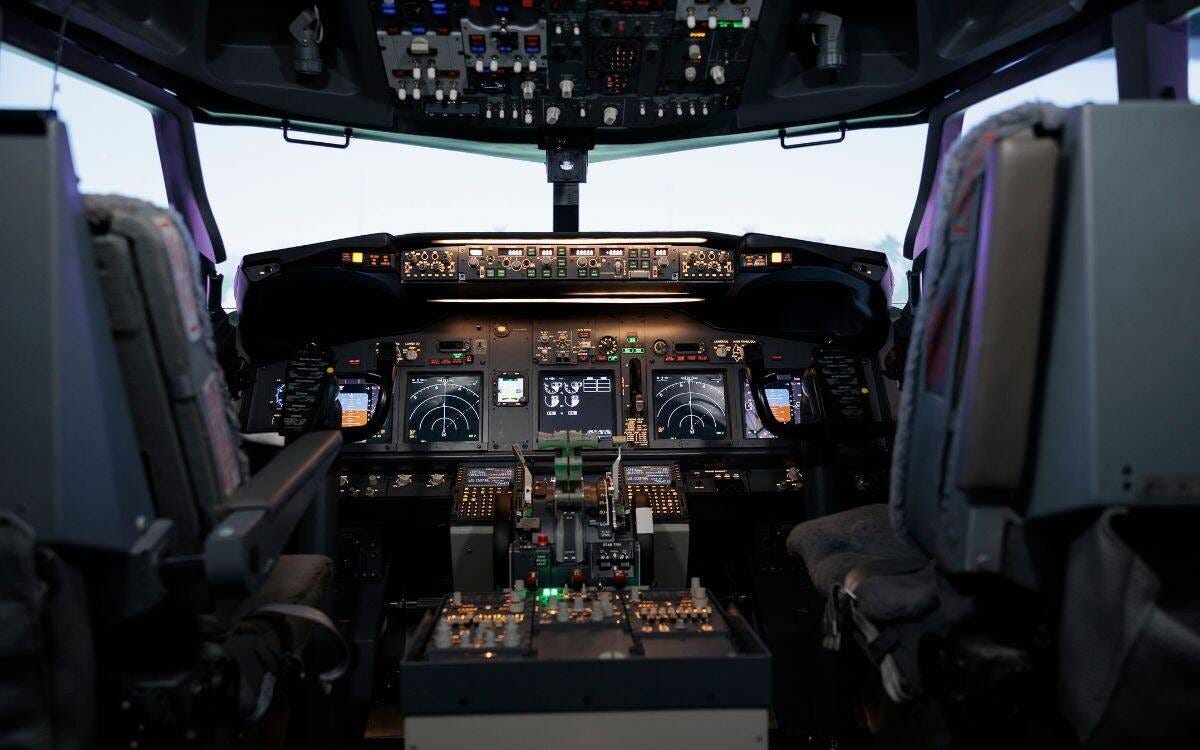
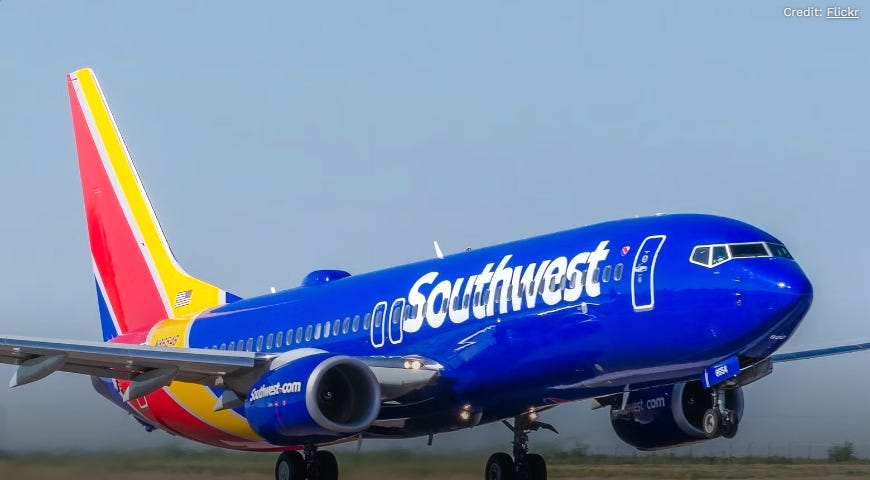
AVTB is still in the growth phase of its business, but has built relationships with a variety of prominent carriers such as Scandinavian Airlines, Wizz Air and LATAM Airlines. However, their most notable partnership is their long term relationship with their first customer Southwest Airlines. Southwest has been at the core of AVTB’s business, both acting as a reliable customer and source of revenue, along with a testing ground to build credibility and proof of concepts. This relationship is at the core of the recent selloff, with Southwest representing around 30% of revenues, and their contract set to expire in June 2026. Despite continuing to kick goals and trading at a very reasonable valuation (we’ll touch on later), the stock is down 30% from its highs due to contract fears, presenting us with this opportunity. While losing the Southwest contract would be brutal, all of the evidence suggests that they will renew. This is not the first time the contract has expired, with a three year extension being negotiated in 2023. Additionally back in 2020 the two companies negotiated to move to a per-flight model, allowing both companies to continue operating reasonably. In the past Southwest representatives have praised AVTECH as “extremely valuable” and having an “excellent technical operational fit”, along with citing their “enhancements to flight planning software” as a key lever in their long term sustainability plans. While losing this contract is a potential risk, I see no reason to believe that it won’t be renewed.
Looking at the numbers this screens as a very attractive opportunity. Revenue has more than tripled since 2021 and grew 38% y/y just last quarter. Gross margins are a very healthy 67% while operating margins have been a steadily improving 33%. At a 468m kr market cap the company did 4.5m kr of underlying earnings last quarter or 18m annualised putting them at a run rate PE of 26. Their balance sheet is rock solid with 33m of net cash and no debt, and the company even paid a small dividend last year. Put simply, assuming they maintain the Southwest contract I believe this valuation to be far too cheap for a high margin, fast growing software company with a proven good product.
I don’t have any strong opinions on management, but they seem reasonable. I think they’ve done a good job of building the business so far, both developing and improving their software, proving it with existing airline relationships while steadily building new relationships. The CEO David Rytter has been with the company since 2012 and first served as the CTO before transitioning to CEO during 2020. He owns around $1.5m USD of stock and bought a large chunk in March 2025. The company has built out an employee ownership program, with several employees participating in share buyins. The company has been good on costs, steadily improving margins over the last few years and focusing on profitable growth.
So why is the company so cheap? The first obvious reason for this is the contract negotiations. I’ve already touched on my thoughts there, but how does the company look if it breaks. While it would be a brutal hit to revenue and profits, assuming around a 30% contribution to revenue the company would likely remain profitable. It should be noted that there is also currency risk in the contract as the company gets paid in USD, so continued weakness in the USD would be a modest headwind. More broadly however this is a niche, $50m USD Swedish microcap. I’ve seen very little commentary about it on twitter, and no free Substack articles about it.
In AVTECH I think we are presented with an opportunity to buy a high margin, high growth stock at an incredible reasonable price due to temporary concerns. In a world where the contract is renewed, it’s very easy to see the company continue to grow earnings at mid double digits while potentially rerating as the story catches on. In this scenario we would likely have a multibagger on our hands. While the risk of losing the contract is concerning, I don’t see the incentives for Southwest to not renew considering the history between the two companies, and the potential upside makes the reward far outweigh the risk. I have made AVTB one of my largest positions at around 5% at the time of writing.
So many threat from enemies, Navblue, Spire Global and Tomorrow.io.
NAVBLUE: The Insider Advantage Airbus is directly supplying flight operation software through its subsidiary, NAVBLUE. The recent strengthening of ties with major carriers like Wizz Air is a prime example of this strategy. Since Airbus builds the aircraft, they possess the "Gold Standard" algorithms to determine exactly how their planes consume the least fuel in any given environment. By bundling this real-time, high-fidelity data into the NAVBLUE package, they’ve created a one-stop shop for airlines. This effectively eliminates the incentive for carriers to seek out third-party vendors like AVTECH.
Spire Global: The Master of Proprietary DataSpire Global has bypassed traditional data sources by launching its own constellation of dozens of nanosatellites to collect global weather data directly. Unlike AVTECH, which relies on purchasing data from the UK Met Office, Spire offers data that is perceived as far more fresh and exclusive. Their ability to own the entire value chain gives them a significant edge in data sovereignty.
Tomorrow.io & ClimaCell: The Tech Giants of Hyper-Local WeatherTomorrow.io (formerly ClimaCell) has become a weather intelligence powerhouse. By leveraging proprietary satellites and AI algorithms, they provide hyper-local forecasts with pinpoint accuracy. Major U.S. carriers like Delta and United are increasingly ditching legacy tools in favor of Tomorrow.io’s platform. Their ability to analyze weather patterns even in areas without radar is a game-changer that AVTECH simply cannot match.
Great write-up, but dang, Im Swedish and trying hard to reduce home country bias!
One of my favourite podcasts about stocks "Gött Tjöt om Aktier" talks about AVTECH from time to time. It's in Swedish, but with AI tools, you can get transcripts in English. https://open.spotify.com/show/4AKvZI4RMaAKNcsjHxZreH
Here are quick AI summaries of the episodes covering AVTECH:
Episode 269: "Portföljen för 2026" (Jan 5, 2026)
In this cornerstone episode for the new year, they officially included AVTECH in their "top cases to hold for 2026."
The "Väskan" Inclusion: The hosts (Gedda and the "Horse") discussed AVTECH (at 01:26:42) as a stock they want in the portfolio specifically for its operating leverage in a recovering aviation market.
The 2026 Thesis: They argued that 2025 was a "setup year" and that 2026 is when the high-margin revenue from the newer ClearPath and proFLIGHT contracts should finally start reflecting in the quarterly reports.
Valuation Note: They mentioned that even though the stock has had a good run, the valuation (EV/EBIT) still doesn't reflect the "SaaS-like" nature of the business once the fixed costs are cleared.
Episode 247: "Casesnack med Albin / Gnuinvestor" (July 28, 2025)
This was a deep-dive guest episode that set the stage for their current bullishness.
The "Free Lottery Ticket": Guest Albin (Gnuinvestor) pitched AVTECH (at 00:25:51) as a company where you basically get a "free option" on massive growth.
Environmental Tailwinds: He pointed out that with new EU regulations on aviation emissions becoming stricter in 2026, AVTECH’s software is no longer a luxury but a "regulatory shield" for airlines to avoid fines.
The "Seal of Approval": They discussed how having Southwest and Lufthansa as long-term partners provides a level of technical validation that few other Swedish micro-caps possess.
Episode 203: "Brasilien, värmepannor och generika" (Sept 16, 2024)
AVTECH Segment: Starts at 00:19:16
The "Take": The hosts used this episode as a post-summer check-in on the company’s recent news. They focused heavily on the technical validation of the product, noting that AVTECH is moving from a "speculative tech play" to a "regulatory necessity."
Key Point: They discussed the impact of the EU ETS (Emissions Trading System) on aviation. Their view was that as carbon taxes rise in 2025/2026, AVTECH’s ability to prove CO2 reductions becomes a massive sales trigger for European airlines.
Episode 194: "iGaming, löpskor och sexleksaker" (July 1, 2024)
AVTECH Segment: Starts at 00:13:54
The "Take": This followed the company’s milestone of paying its first dividend. The hosts debated whether AVTECH should be paying a dividend or reinvesting more aggressively in sales.
Key Point: Ultimately, they viewed the dividend as a "quality stamp" that proves the business model is cash-flow positive. They highlighted the Norwegian contract’s expansion into turbulence warnings as a sign of high "customer stickiness."